 Rongsheng guruhi

Refractory brick size refers to physical measurements—including length, width, height, and angles. Appropriate size ensures that the brickwork forms a strong, seamless lining capable of withstanding high temperatures, mechanical stress, and thermal shock. Shuning uchun, size is a very important factor when purchasing refractory bricks.
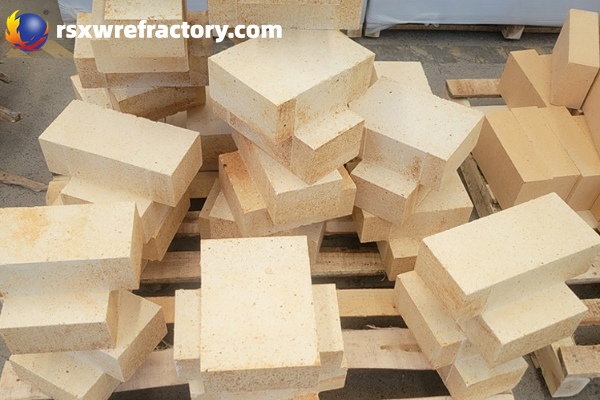
Standard refractory brick size
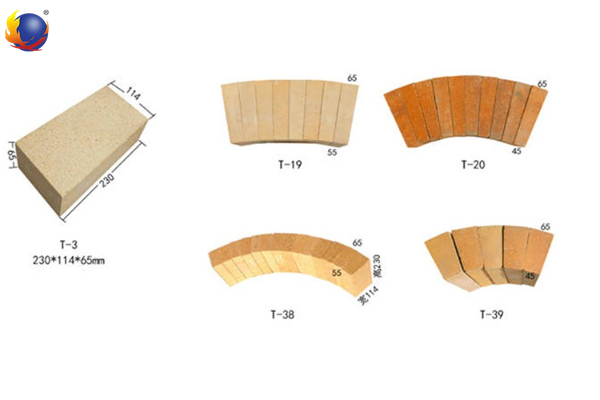
The most common standard size for refractory bricks is 230×114×65mm, also known as T3 brick. This size is globally recognized and widely used in most industrial furnaces.
Common sizes and types of refractory bricks
| Brick Type | Size(mm) | shape | Features/Applications |
|---|---|---|---|
| T3 | 230×114×65 | Straight-laid bricks | Standard size, suitable for most kiln walls and arches. |
| T6 | 250×123×65 | Straight-laid bricks | Slightly larger bricks, used in conjunction with the T3, improve work efficiency. |
| T14 | 171×113×65 | Straight-laid bricks | The smallest standard size; ideal for filling gaps in kilns and for fine brickwork. |
| T19 | 230×114×65/55 | Axe-shaped brick | The arched structure and kiln entrance area feature a conical design. |
| T20 | 230×114×65/45 | Axe-shaped brick | It has greater curvature; suitable for larger dome and arch structures. |
| T29 | 230×171×65/55 | Axe-shaped brick | The wider width improves construction efficiency on curved sections. |
| T30 | 230×171×65/45 | Axe-shaped brick | Suitable for larger arched or vaulted furnace areas. |
| T38 | 230×114×65/55 | Knife-shaped brick | Ideal for arched masonry structures; used for industrial furnace roofs. |
| T39 | 230×114×65/45 | Knife-shaped brick | It has a large curvature; used in kilns with specific curvature requirements. |
| Brick 1 | 230×114×20 | Straight-laid bricks | Thin; used as an insulating layer or surface protection. |
| Brick 2 | 230×114×30 | Straight-laid bricks | The slightly thicker version is used for the insulation layer. |
| Brick 3 | 230×114×40 | Straight-laid bricks | It is commonly used in double-layer lining construction. |
| Brick 4 | 230×57×65 | Straight-laid bricks | The narrow type is suitable for confined structural spaces. |
Why is the size of refractory bricks important?
Precise assembly. Correct brick dimensions ensure tight joints, reducing heat loss and preventing air infiltration.
Structural strength. Accurate dimensions provide balanced stress distribution, especially in arched and vaulted designs.
Reduced material waste. Standardized brick sizes minimize on-site cutting, saving labor and materials.
Thermal efficiency. Properly sized bricks ensure even heat distribution and improve energy efficiency.
Maintenance and replacement. Replacement becomes easier and more cost-effective when standard sizes are used.
WeChat
QR kodini wechat orqali skanerlang